
Rebranding & Packaging Redesign with Eye Candy
If you're managing a brand that's already earned its shelf space, one with real customers, real distribution, and real equity behind it, a rebrand isn't a creative project. It's a risk decision.
You already know the stakes. You've seen what happens when a rebrand goes wrong: iconic packaging replaced overnight, loyal customers unable to find the product they've bought for years, sales dropping before the ink is even dry. You're not looking for someone to hand you a bold new look. You're looking for a partner who understands that your existing equity is an asset to be protected first, and evolved second.
That's the work we do.
Sometimes that work means a full rebrand. Just as often, it means a focused packaging redesign for a line that's earned its shelf space but needs to look and perform like it.
Built for Brands With Something to Lose
Eye Candy Design isn't just a design studio that happens to work in food and beverage, we're embedded in the industry itself, staying close to the trends, the retail landscape, and the people shaping the category, not just the packages sitting on shelf. (Take a look at our media coverage and industry involvement.)
That's exactly why we know a rebrand for an established brand is a fundamentally different discipline than building one from zero.
A new brand's job is to create recognition from nothing. An established brand's job is to protect recognition that already exists, the colour someone spots from six feet away, the shape their hand reaches for without looking, the shelf position their eye goes to on autopilot, while giving the brand room to grow into where it needs to go next.
We start every established-brand engagement the same way: by figuring out what's actually working before we touch a single pixel of what isn't.
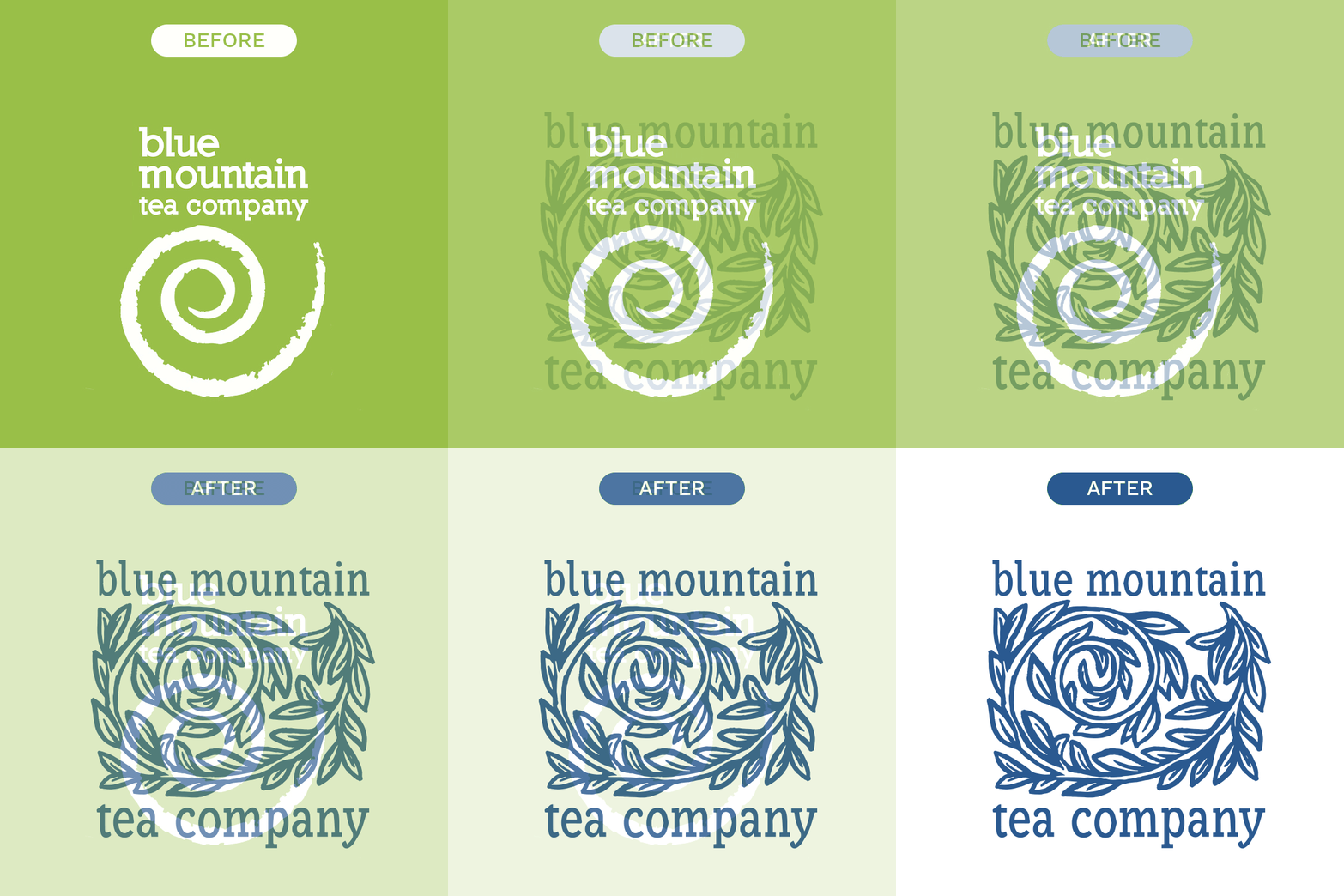
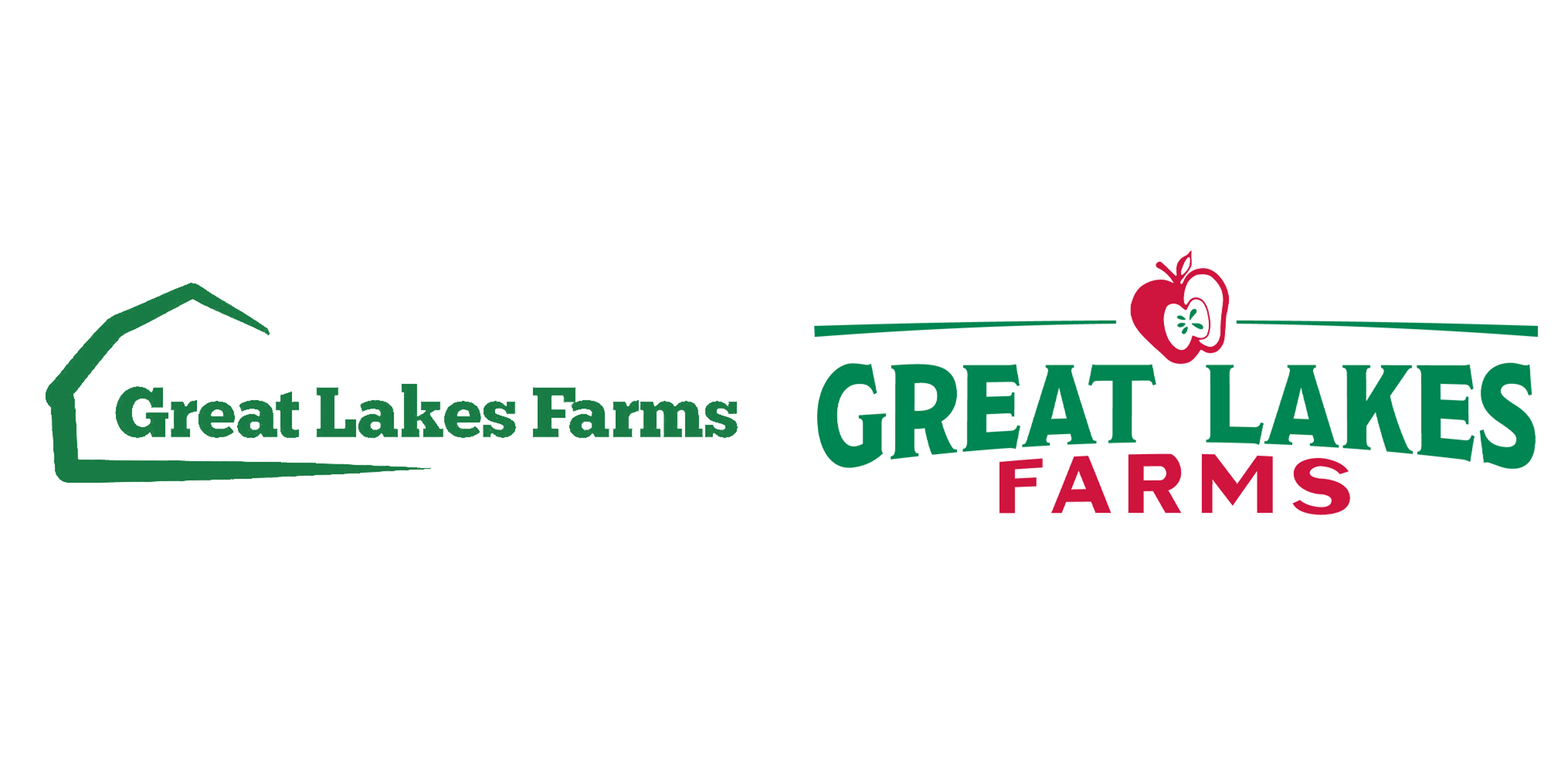
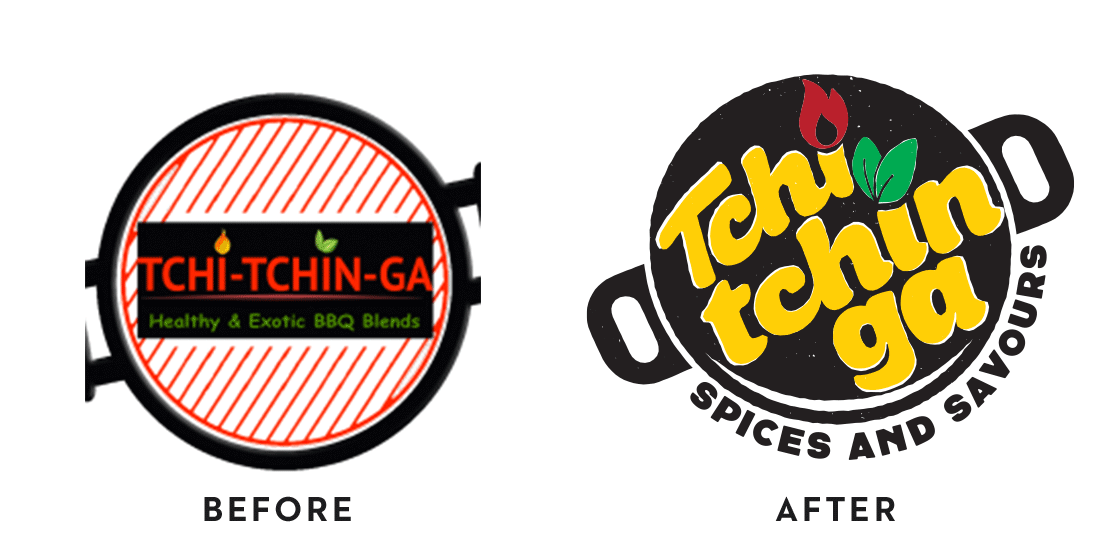
Eye Candy Rebranding Projects

What We Bring to the Table
A rigorous approach to protecting equity. Before any design work begins, we map your distinctive brand assets, the specific visual cues that let customers find you without reading the label, separately from the elements that are simply due for a refresh. That distinction is what separates a successful modernization from a costly misstep, and it's the first thing we work through with every established client.
Packaging redesign without touching what already works. Not every project needs a full identity overhaul. We regularly take on standalone packaging redesign (a label refresh, a new format, a line extension, a response to a regulatory deadline etc.) that update the pack while deliberately leaving your core brand identity untouched. Different scope, same rigour.
Deep food and beverage regulatory fluency, with a specialist on call for the rest. Bilingual packaging for the Canadian and U.S. markets, nutrition facts tables, ingredient declarations, front-of-pack labelling, we handle the large majority of this ourselves as standard practice, built into the design from day one rather than patched on at the end. For the parts that call for a deeper regulatory read, health and nutrient claims, novel ingredients, formulation-to-label accuracy, we bring in our food science partner, for a dedicated compliance review against CFIA and FDA requirements.
Design systems that scale, not one-off labels. Whether you're managing three SKUs or thirty, across one retailer or five, we build packaging architecture designed to hold together as your line grows, so a new flavour launch or a new retail account doesn't mean starting your visual identity from scratch.
Senior involvement from strategy through final files. There's no account layer between you and the person actually making your creative decisions. The person who understands your brand, your category, and your competitive landscape stays on your project from the first conversation to the final production file, which means faster decisions, fewer miscommunications, and a level of continuity that's hard to replicate at a larger shop.
A process built around your retail reality, not just your aesthetics. We think about how packaging performs at 3 feet and at 3 inches, how it holds up under a specific retailer's shelf-ready requirements, and how a redesign will actually be tested and validated before it goes anywhere near a shelf reset.
“I was terrified going into a rebranding for our company but Amanda was extremely supportive, detailed and communicative during the whole process. On top of that I AM IN LOVE with our new bags! We get compliments every single day and I feel so proud to say Amanda was the one who designed them!”
Our Process, Built for Higher Stakes
Phase 1: Strategic Foundation
We don't start with mood boards. We start with evidence.
Every engagement opens with a structured audit of where your brand actually stands today, the assets carrying real recognition, how the category is moving, and where your competitors are strong, exposed, or simply repeating each other. That research isn't a formality; it's what tells us whether a project calls for careful evolution or something bolder, before anyone has an opinion about colour or type.
From there, we translate findings into direction: who you're really talking to, grounded in behavioural and category data rather than assumption; the positioning that's most authentic to your brand and most differentiated in your category; and a voice and message framework the rest of the work can be built on. You'll see all of it, findings, rationale, and our recommended direction, in a single strategic presentation before a single design concept exists. Nothing moves forward on instinct alone.
Phase 2: Creative Development & Execution
Strategy earns its keep in this phase. We study the visual landscape of your category, what every competitor is doing, and more importantly, where they're all doing the same thing, then develop concepts from that whitespace rather than from a blank page.
You'll see three genuinely distinct directions, not three variations on a single idea, each one a different, legitimate answer to the strategy we've already agreed on. Every concept is mocked up in real retail context, so decisions get made the way a shopper will actually experience them — not in the abstraction of a screen. And every design is checked against U.S. and Canadian regulatory requirements as part of the process, not as a final compliance pass after the creative is already locked.
Where a project needs a deeper regulatory read, health claims, novel ingredients, or making sure formulation and on-pack story genuinely align, we bring in our food science partner for dedicated review. Design expertise and food science expertise, applied to the same file.
Common Questions From Established Brand Teams
-
Being senior-led doesn't mean being under-resourced. It means the people managing your strategy and your production files are the same people who understood your brand well enough to win the work, which, for most established brands, means faster and more consistent execution than a larger shop with more layers between decision and delivery.
-
We bring in specialists as the scope requires. Depending on the project, that's meant looping in a food scientist for compliance and claims review, a French-language translator for bilingual packaging, or a food photographer for retail and campaign imagery, the same trusted people across projects, not a different unknown vendor every time. You get the right expertise for the right part of the work, coordinated through a single point of contact instead of managed piecemeal on your end.
-
Both. Case pack dimensions, shelf-ready formats, sustainability documentation, bilingual compliance, these are built into our process by default. And when a project needs a deeper regulatory read (health claims, novel ingredients, formulation-to-label accuracy) we bring in our food science partner for a dedicated review, so nothing that ends up on your packaging is a guess.
-
Not every brand needs a full identity overhaul. A structured refresh, modernizing execution while deliberately preserving your core recognition assets is often the right first move, and it's a conversation we're glad to have before recommending anything more dramatic.
-
Packaging redesign on its own is one of our most common projects. A new SKU, a format change, a compliance deadline, or packaging that's simply fallen behind the brand it's representing, none of that requires touching your logo or identity system. We scope the work to match the actual problem, not the other way around.
Let's Talk About What's Actually at Stake
If you're weighing a rebrand or a packaging system overhaul for a brand that already has real equity to protect, we'd like to understand what you're working with before anyone talks about what it should look like.