
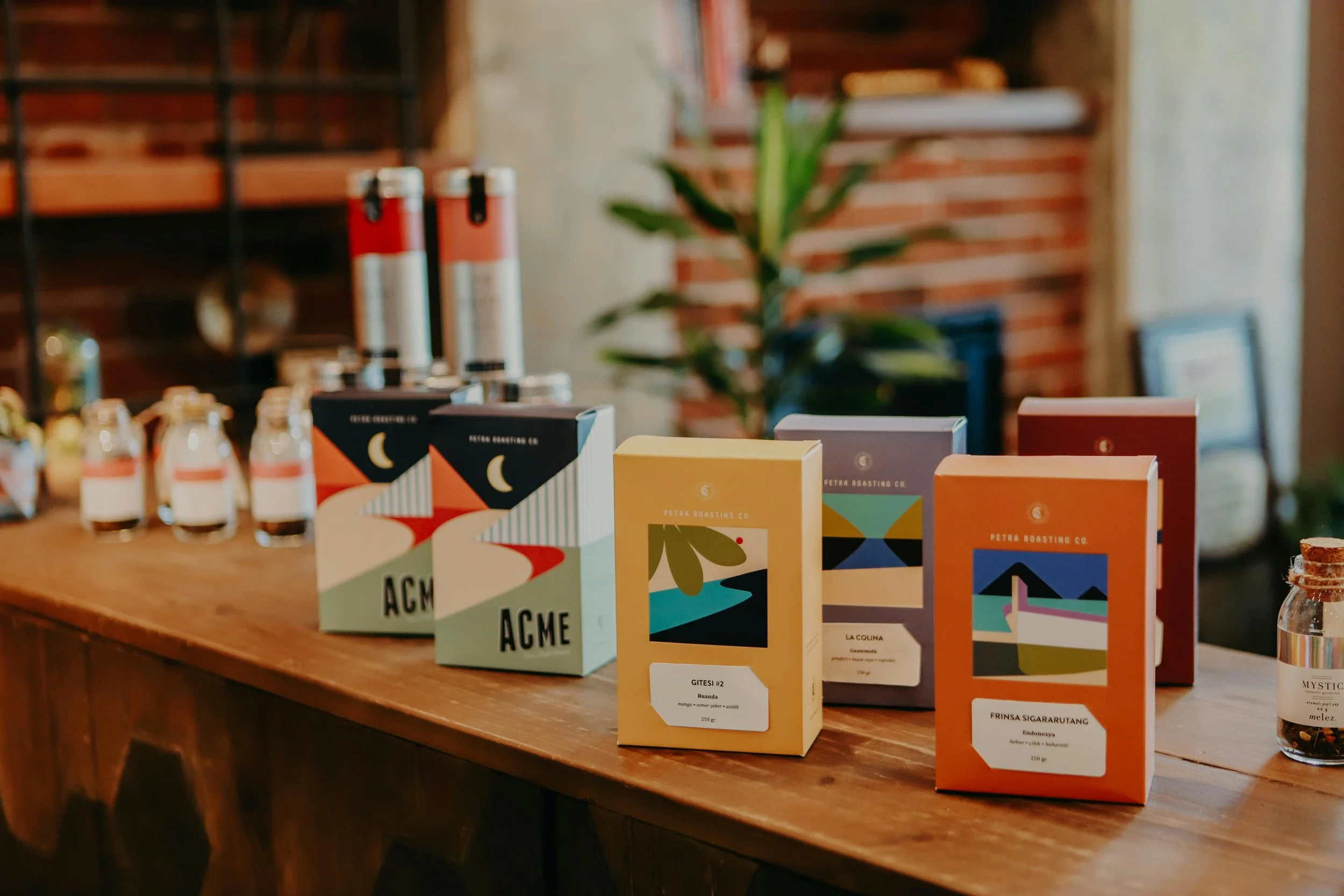
Your food packaging is working around the clock, on shelves, in scroll sessions, and at the moment of purchase, long after your ad spend has faded from memory. Yet many food brands approach packaging design as an afterthought, either overspending on flashy agency work that doesn't move product or cutting corners with templates that blend into the competitive blur. The truth is that strategic packaging design is one of the highest-ROI investments a food brand can make, but only if you understand what you're actually paying for. This guide breaks down real-world costs across the North American market, from scrappy start-ups budgeting their first SKU to established brands refreshing entire product lines, so you can invest with clarity rather than hope.
Food packaging design in North America ranges from $1,000 to $50,000 depending on complexity, with most food brands spending $3,000-$15,000 for professional work. The investment typically delivers 10-100x ROI through increased sales, better distribution, and stronger brand positioning—far exceeding returns from traditional advertising. However, costs extend beyond design fees: brands must budget separately for bilingual requirements (adding 15-30% in Canada), FDA/CFIA compliance review ($250-$1,500 per label), photography ($1,000-$5,000), and sustainable materials (carrying 10-25% premiums in 2024, though this gap is narrowing rapidly).
The landscape: The packaging design services market reached $21.46-30.51 billion globally in 2024, with food and beverage representing the largest segment at 28-45% market share. Canadian brands face unique complexities with mandatory bilingual labeling and CFIA compliance, while both markets are experiencing simultaneous pressures from sustainability mandates, technological disruption through AI, and evolving consumer expectations for transparency and digital integration.
Understanding the pricing spectrum: What food brands actually pay
The packaging design market operates on a clear three-tier structure, though most food brands occupy the middle territory between budget and premium options.
Budget tier ($1,000-$3,000) serves first-time entrepreneurs and simple product launches. At this level, expect online contest platforms like 99designs ($500-$2,000) or junior freelancers charging $25-45/hour. You'll receive 2-3 initial concepts, 1-2 revision rounds, and basic file formats (JPG, PNG, PDF). Standard die-lines come included if working with existing packaging formats, but custom structural design, market research, multiple SKU coordination, and print vendor liaison remain out of scope. Timeline runs 2-6 weeks. This tier works for testing market viability with bootstrap budgets, but lacks the strategic foundation and production expertise that drive shelf success. In Canada, adding mandatory French translation and basic compliance review pushes even simple projects toward $1,500-$3,500.
Mid-range tier ($3,000-$10,000) represents the sweet spot for growing food brands with 2-5 SKUs entering regional or national distribution. Boutique studios/agencies and experienced freelancers (5+ years) deliver 3-4 fully developed concepts, 3-4 revision rounds, and production-ready files across all formats (AI, EPS, PDF, PSD). Expect 3-5 digital 3D mock-ups from multiple angles, complete colour specifications (CMYK and Pantone), basic brand guidelines (5-10 pages), and 1-2 print vendor consultations. Some providers include basic market research, competitor audits, and material recommendations. Standard timeline spans 6-12 weeks. Additional SKUs cost $500-$2,000 each since they leverage the established design system. Canadian brands should budget $4,000-$10,000 to accommodate bilingual design complexity and CFIA compliance verification.
Premium tier ($10,000-$20,000+) serves established brands, major product launches, and competitive categories where differentiation justifies investment. Full-service agencies provide comprehensive brand immersion with discovery phases, 4-6 concept directions, and unlimited or extensive revisions (5-7 rounds). Deliverables include complete packaging systems (primary, secondary, tertiary), advanced 3D mock-ups and renderings, full structural design capabilities, consumer testing and market research, competitor analysis, and complete brand guidelines (10-30+ pages). Agencies manage print vendor coordination, provide regulatory compliance guidance, and deliver files optimized for multiple printing methods. Timeline extends 8-16 weeks or longer for complex projects. Award-winning studios commanding $20,000-$50,000+ bring specialized CPG expertise that routinely delivers measurable market share gains. In the Canadian context, comprehensive bilingual premium projects range $8,000-$16,000 for single products, with multi-SKU launches reaching $30,000-$50,000+.
US and Canadian hourly rates align closely at $100-150/hour for agencies, though freelancers show wider variation ($25-100/hour based on experience). Toronto market rates for small businesses start at CAD $5,000 for local designers, rising to $10,000-$25,000 for mid-tier projects and exceeding $50,000 for large enterprises requiring comprehensive solutions. The key cost differentiator between markets remains mandatory bilingual compliance rather than base design rates.
The nine factors that determine your packaging design investment
Number of SKUs drives the most predictable cost escalation. The first SKU carries the full weight of strategy, concept development, and system creation. Subsequent products in the same range cost just 20-40% of the base design investment since they follow established visual architecture. Industry pricing follows this formula: first SKU at 100% of base cost, second at 30-40%, third and beyond at 20-30%. For example, a $5,000 initial design might cost $1,500 for the second SKU and $1,000 each for additional variants. Some agencies quote $8,000-$18,000 for complete range concepts, then $500-$2,000 per SKU for artwork execution.
Structural versus label-only design creates a 3-5x cost multiplier. Label-only projects range $500-$2,500 for basic to mid-tier work, requiring 2-4 weeks. Structural design demands engineering expertise, with services costing $100-$1,000 in design time, plus tooling/die costs of $150-$2,500 for custom shapes. Print plates for flexographic printing add $150-$2,000 per colour. Full structural plus graphic design typically runs $3,000-$10,000+. Many food brands start with label-only designs on stock packaging (pouches, standard bottles, boxes) to minimize upfront investment, then invest in custom structural design for line extensions once market validation justifies the expense.
Project complexity and brand positioning separate budget from luxury execution. Entry-level projects provide 1-2 concepts, minimal revisions, and standard templates with minor customization—suitable for start-ups and budget brands. Intermediate designs offer 2-3 concepts, moderate customization, and custom colour schemes for small to medium businesses. Premium designs include 3-4 concepts, in-depth brand research, custom typography, and market positioning for established brands in competitive markets. Luxury/bespoke designs deliver extensive brand immersion, unlimited revisions, detailed production specifications, and comprehensive market research for high-end brands and national launches. Food and beverage projects typically fall under $10,000 unless pursuing premium positioning.
Timeline urgency triggers rush fees of 20-200% above standard rates. Industry standards impose minimum 20-25% premiums for expedited delivery, with typical rush fees of 25-50% for compressed timelines. Projects requiring 5-7 days command 20-50% premiums, 24-48 hour turnarounds cost 50-100% extra, and same-day or overnight work demands 100-200%+ premiums. A $1,000 base project with a 200% rush fee totals $3,000. Rush fees apply when work must occur outside normal business hours, during weekends or holidays, when pushing aside scheduled work, or when timelines fall below standard turnaround for project complexity. Standard agency timelines run 6-10 weeks; freelancers typically complete simple projects in 2-4 weeks. Avoid rush fees by planning packaging development 3-6 months before launch.
Revision rounds impact both timeline and budget. Basic packages include 1-2 revision rounds, standard packages offer 2-3 rounds, and premium packages provide 3-4 rounds or unlimited revisions (which can increase project costs 30-50%). Each additional concept beyond what's included costs $150-$500. Extra revision rounds add $50-$500 depending on complexity, typically 10-15% of base project cost per round. Clear creative briefs upfront minimize revision cycles. Brands should involve all stakeholders—sales, operations, regulatory—in early approvals to avoid costly late-stage changes.
Strategy and research inclusion doubles or triples design-only pricing but dramatically improves market performance. Top-line positioning costs $5,000-$8,000, comprehensive strategy with consumer insights and brand definition runs $8,000-$20,000+, and projects including consumer research exceed $20,000. Brand identity development adds $5,000-$10,000 for basic brand marks or $10,000-$20,000 for full identity systems. Projects combining strategy, research, and design typically cost 2-3x more than design-only work but deliver significantly better outcomes.
Designer experience and provider type create price differentials of 3-5x. DIY templates cost $0-$1,000 with limited customization. Junior freelancers charge $500-$1,000 per project, experienced freelancers command $1,000-$10,000, and hourly rates span $25-$150. Boutique agencies range $2,000-$10,000+ with team expertise and project management. Mid-size agencies charge $10,000-$20,000 for full-service offerings. Large national agencies start at $20,000+ per SKU, bringing extensive research and strategic planning. Senior designers and established agencies charge premium rates but deliver faster execution, fewer revision cycles, and better strategic results based on accumulated category expertise.
Geographic location affects pricing by 20-40% globally, though remote work since 2020 has reduced these disparities. North America and Australia operate at baseline 1.0x rates ($100-150/hour for agencies). Western Europe runs 0.7-0.9x (UK averages $75/hour). Eastern Europe spans 0.5-0.7x (Poland/Spain at $50-100/hour). Asian markets range 0.2-0.5x (India at $55/hour, Philippines under $25/hour). Within the US, major markets (NYC, LA, SF, Chicago) charge $125-$200/hour with premium positioning, while secondary markets (Denver, Austin, Portland) offer $100-$150/hour with competitive quality. Remote/online services increasingly price on experience rather than geography. Canadian agencies cluster tightly around $100-150/hour, with Toronto showing minimal premium versus other major cities.
Regulatory and compliance requirements add mandatory costs that vary by market. US food brands need FDA-compliant labelling, with basic reviews starting at $400-600 per label and comprehensive legal reviews (including class action risk assessment) costing $1,295 per label. Canada requires CFIA compliance with no premarket clearance for most packaging materials (exceptions: infant formula and novel foods require Health Canada Letters of No Objection). Preventive Control Plans and Safe Food for Canadians Regulations add complexity. Bilingual labelling (English/French) represents the largest Canadian cost adder, with professional translation running $100-300 plus design complexity premiums. French text runs 30-50% longer than English, requiring careful space planning and adding 15-30% to total design costs. Quebec's Bill 96, effective June 1, 2025, imposes stricter requirements with French given prominence over English, potentially requiring separate packaging versions. Technology Access Centres across Canada offer free or subsidized regulatory support. Non-compliance risks product removal, costly reprinting, and damaged market reputation.
Breaking down deliverables: What you actually receive at each investment level
Understanding exactly what comes standard versus what costs extra prevents budget overruns and ensures you get production-ready files that manufacturers can actually use.
Budget tier ($1,000-$3,000) standard deliverables include 2-3 initial design concepts, 1-2 revision rounds, final files in JPG and PNG formats (basic resolution), vector files (AI or EPS, sometimes limited), standard die-lines if working with existing packaging formats, basic colour specifications, and 1-2 digital mock-ups. Copyright ownership typically transfers to the client. Timeline runs 2-4 weeks. What's NOT included: custom structural design, market research, multiple SKU coordination, print vendor liaison, physical prototypes, photorealistic 3D renderings, comprehensive brand guidelines, photography or custom illustration, and extensive production support. This tier works for first product launches with limited budgets, simple packaging like labels or pouches on stock containers, market viability testing, and bootstrap start-ups validating concepts before full investment.
Mid-range tier ($3,000-$10,000) comprehensive deliverables provide 3-4 fully developed design concepts, 3-4 revision rounds, production-ready files in multiple formats (AI, EPS, PDF, PSD), high-resolution files optimized for print, fully editable vector artwork, coordination across 2-4 SKUs, standard die-lines adapted to your specific dimensions, 3-5 digital 3D mock-ups from multiple angles, complete CMYK and Pantone colour specifications, detailed typography specifications, print-ready files with bleeds and crop marks, basic guidelines (5-10 pages), email and/or phone consultation access, and 1-2 print vendor consultations. Sometimes included (verify with provider): basic market research, competitor audit, simple brand positioning, copywriting assistance, material recommendations, basic photography direction, and social media assets featuring the packaging. Timeline spans 6-12 weeks. Common add-ons include additional SKUs ($500-$2,000 each), physical prototypes ($200-$500), rush delivery under 2 weeks (+20-50%), extended revisions ($200-$400 per round), and custom structural modifications ($1,000-$3,000).
Premium tier ($10,000-$20,000+) complete package encompasses comprehensive discovery and strategy phases with brand audits, competitive analysis, consumer research and insights, market positioning strategy, trend analysis, target audience profiling, and brand platform development. Design phases deliver 4-6 concept directions, full packaging system design, multiple SKU coordination (6-12+ products), primary/secondary/tertiary packaging design, and unlimited or extensive revision rounds (5-7 structured rounds). Production files include complete artwork in all formats, print-ready files (AI, EPS, PDF with layers), high-resolution raster files (PSD, TIFF), web-optimized files (PNG, JPG), complete vector assets library, die-lines for all package formats, cutting and scoring specifications, spot colour and process colour files, and multiple file versions for different printing methods. 3D and visualization deliverables feature photorealistic 3D renderings, lifestyle mock-ups, shelf presence visualizations, interactive 3D models, and sometimes packaging animations. Comprehensive brand guidelines (10-30+ pages) cover typography systems and usage, complete colour palettes with specifications, logo placement and sizing rules, photography and imagery style guides, material and finish specifications, sustainability guidelines, and regulatory compliance checklists. Support services include print vendor management, material sourcing assistance, prototype development (2-3 rounds), press checks and colour approvals, FDA/CFIA regulatory compliance support, sustainability consulting, and shelf presence testing. Timeline runs 8-16 weeks or longer for complex projects.
What always comes standard in professional packages ($3,000+): multiple initial concepts (3-4), revision rounds (2-4), production-ready files (AI, PDF, EPS), high-resolution export files, copyright ownership, digital mock-ups, die-lines for standard formats, colour specifications (CMYK/Pantone), print specifications, and email support during the project.
What typically costs extra: 3D structural design for custom bottle or container shapes ($5,000-$15,000), proprietary structural engineering, custom hand-drawn illustration ($2,000-$5,000), character development and custom iconography, professional product photography ($1,500-$5,000 including food styling), copywriting for product descriptions and brand storytelling ($500-$2,000), compliance copy, market research including consumer testing and focus groups ($2,000-$10,000), shelf testing, additional SKUs beyond what's included ($500-$2,000 each with volume discounts), rush fees for expedited timelines (+20-50% of project cost), printing coordination and vendor management ($1,000-$3,000), press checks and quality control, and physical prototypes ($200-$500 per iteration).
The hidden costs: Budgeting beyond design fees
Successful packaging launches require budgeting for six categories of additional expenses that design fees rarely cover.
Printing and production costs represent the largest post-design expense and vary dramatically by technology and materials. Digital printing costs $0.50-$5 per unit with no print plates required, better for shorter runs. Flexographic printing requires print plates at $150-$2,000 per colour but excels for large volumes. Rotogravure runs $300-$450 with highest quality for massive volumes. Material costs per unit include cardboard boxes ($0.75-$6), folding cartons ($1.80-$2.25), rigid boxes ($1-$200 depending on size and materials), plastic bottles ($0.20-$0.40), flexible packaging ($0.10-$0.30), glass bottles ($0.60-$1.00+), and premium metal packaging. Finishing options like lamination, embossing, debossing, foil stamping, spot varnish, and die-cutting add $1-$2 per unit. Industry rule: packaging costs typically represent at least 10% of retail price. A $10 retail product should budget $1 for packaging materials alone, separate from design costs.
Product photography runs $20-$150 per image for basic flat-rate pricing, with product shots averaging $50-$100 per image and complex product photography costing $100-$250 per image. The industry average sits at $102 per image. Hourly rates span $150-$500 per hour for product photography and $250-$500/hour for commercial work (day rates $1,000-$5,000). Package pricing ranges from basic ($50-$150) to standard ($300-$500) to premium ($1,000-$2,500). Additional costs include styling and props ($500-$2,000), studio rental if not included ($200-$1,000+ per day), equipment rental, and post-production retouching ($50-$200 per image). Photography costs are almost never included in design fees and must be budgeted separately. Budget $300-$1,500 for basic product photography, $1,500-$3,500 for styled food photography suitable for premium brands.
Copywriting services for packaging elements cost $3-$5 per description for entry-level writers, $10-$20 for experienced copywriters, and $20+ for premium copywriters. Hourly rates span $30-$200 based on experience. Extensive packaging copy projects run $2,500-$5,000. Food packaging requires front panel messaging, back panel information, ingredient lists, usage instructions, nutritional information formatting, and regulatory text. Efficient copywriters produce 10 descriptions per hour, translating to $100+/hour with productivity. Budget $300-$1,000 for basic packaging copy, $1,000-$2,500 for comprehensive brand storytelling across multiple panels and SKUs.
Regulatory compliance review represents mandatory spending that prevents costly mistakes. US FDA label compliance basic reviews start at $400-600 per label, covering basic FDA requirements, nutrition labelling, and ingredient labelling. Comprehensive legal reviews cost $1,295 per label, including full FDA compliance checks, legal review, and class action lawsuit risk assessment (follow-up questions billed separately). Additional services include Nutrition Facts panels at base cost with additional sizes costing $90 (includes up to 3 sizes) then $30 each after the third, ingredients and allergens for existing products at $120 for the first recipe plus $60 for each additional, and nutrient dial-in (recipe adjustment) at $150. Canadian CFIA compliance requires Preventive Control Plans and Safe Food for Canadians Regulations licensing. While no premarket clearance exists for most packaging materials, Health Canada Letters of No Objection are required for infant formula and novel food packaging. Technology Access Centres provide free or subsidized compliance support. FSMA compliance costs US brands an average $22,000 in the first year for small/medium businesses, then $8,000 annually to maintain systems. FDA does not pre-approve food labels; companies bear full responsibility for ensuring compliance, making third-party review essential to avoid recalls or regulatory action.
Structural prototyping costs range from simple foam mock-ups ($100-$300) and basic cardboard prototypes ($200-$500) to moderate complexity 3D printed prototypes ($100-$1,000), CNC machined prototypes ($500-$2,000), and full structural packaging prototypes ($500-$3,000). Multiple iterations add $200-$1,000 per revision. Engineering design time represents the major cost component beyond materials, assembly, and testing. Simple prototypes require 1 week or less, complex prototypes take 2-4 weeks, and multiple iteration cycles add 1-2 weeks per cycle. Many packaging manufacturers offer free design prototypes as part of larger orders, but low-volume projects incur additional costs for first-offs created for approval. Budget $500-$2,000 for structural prototyping across 2-3 iterations.
Consumer testing provides validation but carries significant costs. In-person focus groups require participant incentives ($50-$100 minimum per session, often higher), typical session length of 1-2 hours, groups of 8-20 participants, plus venue rental, participant recruitment, refreshments, moderator fees, and analysis. Full focus group studies cost several thousand dollars. Virtual focus groups reduce costs 20-40% versus in-person through eliminated venue costs, reduced travel, better attendance rates, and wider geographic reach. Alternative methods include online surveys/polls (PickFu polls run $50-$300 for quick feedback), click tests and heatmap testing, and A/B testing platforms with subscription or per-test fees. Full-service market research firms charge $5,000-$20,000+ per study including recruitment, testing facilitation, analysis, and reporting. With 72% of consumers saying packaging design influences purchasing decisions, testing justifies investment despite costs. Budget $2,000-$5,000 for basic online testing, $5,000-$10,000 for comprehensive quantitative research, $8,000-$15,000 for professional focus groups.
Other common expenses include custom illustrations ($300-$3,000+ depending on complexity), stock illustration licensing ($50-$500 per image), original extensive artwork ($5,000-$10,000), font/typography licensing ($50-$500 per font family), extended licensing for packaging, custom typeface development ($5,000-$20,000+), UPC/EAN barcode registration ($30-$250), GS1 company prefix ($250-$10,000 based on company size), professional 3D renders ($200-$1,000 per image), 3D visualization for presentations ($500-$2,000), interactive 3D models ($1,000-$5,000+), colour proofs ($50-$200 per proof), press checks including travel and time ($500-$2,000), and prototype shipping ($50-$200 depending on location).
Total budget allocation recommendation: Design phase should represent 60-70% of budget (strategy 20-25%, design execution 35-40%, artwork/production files 10-15%), with additional costs taking 30-40% (photography 5-10%, copywriting 2-5%, compliance 3-5%, prototyping 5-10%, testing 5-15%, contingency 5-10%). Always budget 10-20% contingency for revisions and adjustments.
Evaluating packaging design partners: Red flags and value indicators
Selecting the right designer or studio/agency requires looking beyond portfolio aesthetics to assess process, expertise, and business alignment.
Critical questions to ask fall into five categories. For experience and portfolio: request specific category experience, ask for 3-5 relevant case studies with measurable results (sales lift, market share gains), demand physical samples of produced work rather than just digital mock-ups, inquire about FDA/CFIA compliance expertise, and verify regulatory and industry standards experience. For process and capabilities: understand the design process from concept to production, request detailed timelines, clarify how many revision rounds come included, confirm prototyping service availability, identify production partnerships, verify whether they handle both structural and graphic design, and ensure they provide print-ready files in required formats. For team and resources: identify specific team members who will work on your project, understand team expertise across strategy, design, and production, assess how they handle multiple simultaneous projects, learn what design software and tools they use, and determine if they conduct consumer testing or market research. For business terms: understand pricing structure (hourly versus fixed fee), get itemized quotes showing exactly what's included, review payment terms and schedules, clarify design file and intellectual property ownership, verify file formats including editable originals, and understand post-project change policies. For collaboration: learn their client collaboration process, establish communication frequency and methods, identify your main point of contact, understand how they incorporate feedback, and review project management tools.
Red flags for pricing too cheap: significantly below market rate ($15-20/hour or $300-500 total for complex projects), unwillingness to provide itemized estimates, promises of "everything" for unrealistically low prices, pricing misaligned with portfolio quality, vague descriptions of what's included, no clear revision policy, and unclear file ownership terms. Warning signs include unprofessional communication, slow response times (48+ hours consistently), missed deadlines without communication, impatience to start without discovery, failure to ask questions about your business goals, inability to provide references or testimonials, reluctance to share process details, fake-appearing portfolios, no relevant industry experience, inability to explain design decisions, only pretty pictures without context or results, and no physical samples of produced work.
Red flags for pricing too expensive: pricing 2-3x above market rate without justification, inability to explain cost breakdowns, charges for basic revisions within original scope, hidden fees appearing later, portfolio not justifying premium pricing, lack of measurable results and case studies, and pushing unnecessary services. Other warning signs include inability to provide accurate estimates with clear scope, refusal to provide timelines or general timeframes, changing pricing after initial quotes, requiring full payment upfront versus milestone payments, contract retaining design ownership or only licensing work, only providing final files without editable source files, and unclear production file specifications.
Value indicators that justify premium pricing include strategic approaches where agencies ask about business goals, target audiences, and competitive landscapes; proven results through case studies with measurable outcomes; process clarity with defined phases from research to execution; production knowledge understanding materials, printing, and manufacturing constraints; long-term thinking considering scalability, brand systems, and future SKUs; risk mitigation through consumer testing, prototyping, and revisions; industry expertise with specific food category knowledge and compliance understanding; and comprehensive deliverables including brand guidelines, multiple file formats, and production specifications.
The value calculation formula: (Expected Sales Lift % × Annual Revenue) - (Design Cost + Production Setup) = Net Value. Example: 15% sales lift on $1M product equals $150K additional revenue, less $20K design plus $10K production setup equals $120K net value in year 1. This calculation explains why brands selling into major retailers should invest $15,000-$40,000 in professional design rather than saving $10,000 on budget solutions that fail to drive sales.
Provider type comparison shows distinct trade-offs. Freelancers ($25-45/hour, $500-$10,000 projects) offer cost-effectiveness, direct communication, faster simple project turnarounds, flexible availability, and personal relationships, but provide single perspectives without team collaboration, limited capacity for large projects, potential reliability concerns (95% work part-time), less project management infrastructure, inconsistent deadline adherence, and limited scalability. Best for budgets under $5,000, simple single-SKU projects, quick turnarounds, start-ups testing concepts, and brands with clear visions requiring execution only.
Small studios/agencies ($50-100/hour, $3,000-$25,000 projects) deliver team collaboration, multiple specializations, established processes, better project management, business resilience through team coverage, quality control systems, more strategic approaches, and industry-specific expertise, though at higher cost than freelancers with less flexibility and communication through account managers. Best for growing brands, multi-SKU product lines, needs for strategic input, moderate budgets ($5,000-$25,000), and ongoing packaging needs.
Large premium agencies ($100-200/hour, $10,000-$50,000+ projects) provide comprehensive services from research to production, multi-disciplinary teams (strategists, designers, production experts), established quality assurance processes, broader capability for simultaneous projects, deep industry knowledge, market research capabilities, production partnerships, strategic brand positioning, and long-term partnership potential, but represent highest costs, less direct control, potential overkill for simple projects, and longer approval timelines. Best for large brands and major product launches, complex multi-product portfolios, comprehensive strategy plus execution needs, market research requirements, production oversight needs, and budgets $25,000+.
Portfolio quality indicators include diverse ranges of work in relevant categories, before/after examples with context, testimonials from previous clients, measurable results (sales data, market performance), physical samples beyond mock-ups, consistent high-quality execution, understanding of production realities, innovation within practical constraints, and both concept and produced work. Ask: Can you show me this design on an actual produced package? What was the business objective and did it achieve results? What production challenges did you solve? How did you arrive at this design direction? What testing or validation was done? What would you do differently with more budget or time?
Industry benchmarks: Market data and ROI expectations
The packaging design services market reached $21.46-30.51 billion globally in 2024, projected to grow to $30.38-48.16 billion by 2034 at 3.55-4.70% CAGR. Food and beverage represents 28-45% of this market as the dominant and fastest-growing end-use sector.
Consumer behaviour drives investment: 72-75% of consumers say packaging design influences purchasing decisions, with products evaluated in less than 15 seconds on shelf. Premium packaging makes products 83% more desirable as gifts to US consumers, while unique packaging drives 42% more social media sharing. Brand loyalty increases dramatically with transparency, with 76% of consumers more loyal to brands providing transparent product information and 94% more loyal to brands offering complete transparency. Color alone drives 90% of snap judgments about products, and packaging directly influences 10% of product sales costs.
ROI significantly exceeds advertising: Package design yields far greater ROI than advertising, exceeding three advertising campaigns and outlasting eight promotional cycles. Corporate packaging budgets remain much smaller than advertising despite these superior returns. Real-world results show 32% of businesses experienced increased revenue after improving packaging. Properly executed packaging delivers 16x ROI potential in 3 years. Well-designed packaging can create 15%+ sales growth within 6 months.
Average costs by food category: Beverages range $2,000-$25,000 (entry-level starts at $1,000 for minimum 3 concepts, with additional variants at $300 per flavour/SKU). Snacks and confectionery run $3,000-$12,000 for design services with flexible packaging materials at $0.25-$1.50 per unit, and full brand systems costing $15,000-$40,000. Dairy products span $5,000-$15,000 for standard design and $20,000-$50,000 for multi-SKU ranges. Most food and beverage projects fall under $10,000 for standard complexity.
Sustainable packaging market expansion: The sustainable packaging sector reached $292.71 billion in 2024, growing to $423.56 billion by 2029 at 7.67% CAGR. Importantly, 60% of consumers prefer eco-friendly packaging and 82% of shoppers are willing to pay more for sustainable options. Consumers show willingness to pay 9.7% average premiums for sustainable packaging specifically. This consumer support justifies the 10-25% initial cost premiums for eco-friendly materials in 2024, though this gap narrows rapidly as production scales increase.
Timeline expectations: Simple packaging projects (1 SKU) require 5-6 weeks total (1 week discovery, 2 weeks concept development, 1-2 weeks revisions, 1 week production files). Complex multi-SKU projects need 8-16 weeks (2-3 weeks research and strategy, 1-2 weeks discovery, 3-4 weeks concept development, 2-3 weeks testing/validation, 2-3 weeks revisions, 1-2 weeks production files). Plan packaging development 3-6 months before launch to avoid rush fees.
Success metrics to track include pre-launch consumer preference testing results, shelf visibility scores, brand recognition improvement, and purchase intent lift; plus post-launch sales velocity versus previous design, market share change, distribution expansion, social media mentions and shares, customer feedback scores, return and damage rates, and repeat purchase rates.
Canadian market considerations: Navigating bilingual requirements and CFIA compliance
Canadian food brands face unique regulatory and linguistic requirements that significantly impact packaging design budgets and timelines.
Bilingual labeling represents the primary cost differentiator from US markets. All mandatory information must appear in both English and French including product identity, net quantity (metric units), Nutrition Facts Tables, ingredient lists (in descending order by weight), allergen declarations, "best before" dates, and manufacturer information (which can be unilingual). Professional translation costs $100-300 for all-inclusive packaging translation including artwork revision. French text runs 30-50% longer than English (some sources cite 20% average), requiring careful space planning and font size calculations based on package surface area. Typography must follow French Canadian rules for hyphenation and punctuation. Professional translation is essential using Quebec French (not European French) with food industry-specific terminology. This complexity typically adds 15-30% to total design costs.
Design implications require French and English to have equal prominence, minimum font sizes mandated based on package size, specific positioning requirements for various elements, bilingual symbols required (ml, L, g, kg), and mandatory metric system. Some US products cannot simply add stickers for Canadian market entry; complete relabelling and redesign proves necessary to meet different regulatory standards.
Quebec-specific requirements became stricter under Charter of the French Language (Bill 96), effective June 1, 2025. French must be at least as prominent as English (not merely equal), generic and descriptive trademark terms must be translated to French, all inscriptions on products, packaging, containers, and leaflets must be in French, and the requirements exceed federal standards with even non-mandatory information expected in French. Companies may need separate packaging versions for the Quebec market specifically. Products manufactured before June 1, 2025 can be sold until June 1, 2027 as a phase-out period. Budget for legal compliance consultation with language law specialists, as potential fines apply for non-compliance.
CFIA compliance requirements include Safe Food for Canadians Regulations (SFCR) in force since January 2019, Preventive Control Plans (PCP) required for manufacturers, processors, and packagers, licensing required for interprovincial and international trade, and traceability requirements (one step forward, one step back). Packaging materials require no premarket clearance for most applications as of July 2014, with exceptions for infant formula and novel food packaging requiring Health Canada Letters of No Objection (LONO). Voluntary LONO remains available from Health Canada for other materials. Generally, FDA-compliant packaging is likely acceptable, but independent Canadian review is required. Non-compliance risks include product removal from shelves, costly reprinting, damaged reputation, and lost distribution opportunities.
Front-of-Package Nutrition Symbol becomes mandatory by December 31, 2025 for foods high in saturated fat, sugars, or sodium (≥15% daily value). Designs must meet CFIA technical specifications, requiring label redesigns for affected products. Other Canadian-specific elements include "best before" dates required for products with ≤90 day shelf life (not required in US except infant formula), bilingual date formatting with specific bilingual symbols for months, serving sizes that may differ from US standards (Health Canada database), daily values with different percentages than US for some nutrients, different allergen list requirements, and Canadian-specific standards of identity (such as enriched flour requirements).
Strategic recommendations for Canadian market entry: Budget 15-30% extra for bilingual design versus US-only packaging. Work with Canadian-specialized studios/agencies that have expertise in CFIA compliance. Start compliance work early since regulatory requirements are complex and early engagement prevents costly redesigns. Consider Technology Access Centres offering free or subsidized regulatory support. Plan for Quebec market even if not selling there initially, as design flexibility helps future expansion. Document formulations as required for Nutrition Facts Tables and compliance. Recognize that 78% of Toronto consumers say unique packaging influences purchase decisions (2024 Packaging Association of Canada survey). The Canadian market values sustainability and eco-friendly materials highly, especially in multicultural markets like Toronto/Ontario where design can reflect diversity.
Canadian agency pricing structures follow four common models. Hourly rate model is most common and straightforward at $25-$250+ CAD/hour (average agency rate $100-$150 CAD/hour). Project-based pricing offers fixed fees for defined scope, with typical food packaging running $1,000-$10,000 CAD and complex projects reaching $10,000-$25,000+ CAD. Tiered/package pricing provides basic, intermediate, and premium tiers starting at $5,000 CAD for small businesses up to $50,000+ CAD for comprehensive solutions. Retainer models work for ongoing design services suitable for brands with multiple products.
2025 trends reshaping packaging design costs and strategy
Three major forces are simultaneously transforming the packaging design landscape: sustainability mandates, AI technology adoption, and supply chain disruptions. Understanding these dynamics helps brands make smarter investments.
Sustainability carries short-term premiums but delivers long-term value. Bio-plastics cost $0.10-$0.30 more per unit than conventional plastic in 2024. Recycled paper and organic materials add $0.20-$0.50 per unit. Paper bags cost $0.04 versus $0.01 for plastic bags (4x cost). Overall eco-friendly premiums run 10-25% higher than traditional packaging currently. However, some sustainable options like corrugated cardboard inserts ($0.18) already cost less than plastic thermal form trays ($0.27). The cost gap is narrowing rapidly as production scales increase, with industry experts predicting cost parity in many categories by 2026-2027. Tooling fees for new materials like molded pulp add $10,000-$15,000. Certification costs (FSC, biodegradable labelling) add approximately 7% to operational costs. Design agencies increasingly charge 10-20% premiums for sustainability consulting and material research services.
The sustainable packaging market is projected to reach $423.56 billion by 2029 from $292.71 billion in 2024 (7.67% CAGR), driven by consumer demand with 82% of shoppers willing to pay more for sustainable packaging and consumers showing willingness to pay 9.7% average premiums. Long-term ROI opportunities include reduced waste disposal fees, material optimization reducing costs 15-40% through right-sizing, enhanced customer loyalty offsetting initial premiums, regulatory compliance avoiding future penalties and taxes, and operational savings like IKEA's €1.2 million annually through packaging optimization.
Supply chain pressures add 8-15% to material costs in 2024. Wood pulp increased +15% (key for corrugated packaging), energy costs rose +10% (electricity and fuel), labour costs climbed +8% (wage inflation), transportation and logistics surged +12%, corrugated cardboard increased +9% from 2022-2023, and overall inflation on inputs ran +5% across chemicals and maintenance supplies. Port congestion reduces material availability, driver shortages impact delivery, global supply chain bottlenecks persist from COVID-19 aftermath, geopolitical tensions affect material sourcing, and Brexit impacts European supply chains. Design implications include right-sizing emphasis with brands reducing package dimensions to cut material and shipping costs, material substitution shifting to locally available alternatives, lead time planning extending timelines requiring earlier design finalization, and multi-sourcing strategies where designs must accommodate material variations.
E-commerce growth drives corrugated demand (+20% growth), predicted to reach 23% of global retail sales by 2027, with domestic parcel shipping rates increasing +5.9% average in 2024. Critically, 40% of all packaging is oversized for contents according to DHL data, creating immediate cost reduction opportunities. Flexible packaging is preferred with lower material costs and lighter weight, with the food sector projected to hold 40% of the flexible packaging market by 2025.
Smart packaging and digital integration are becoming standard expectations. QR codes are becoming standard for product information access with minimal cost (essentially free). NFC tags enable instant digital engagement at $0.10-$0.50 per unit. RFID tags provide supply chain tracking and authentication at $0.05-$0.50 depending on complexity. IoT sensors offer real-time condition monitoring (temperature, freshness) at premium pricing but growing market. GS1 Digital Link 2D barcodes are mandated to replace UPCs by late 2027. The Internet of Packaging Market reached $21.57 billion in 2024, projected to grow to $54.43 billion by 2034 at 9.7% CAGR.
Expert predictions for 2025-2026: Sustainability cost gap narrows to 5-10% premium versus traditional by end of 2025 (down from 10-25%) as economies of scale kick in, government incentives expand, and technology improvements reduce production costs. Supply chain stabilization is expected with material costs plateauing after 2024 increases, continued emphasis on local sourcing and supply chain resilience, and digital twins and AI optimizing logistics costs.
By 2026-2028, sustainable packaging achieves cost parity in many categories, AI tools become commodity-priced as competition increases, smart packaging features become table stakes, and digital-physical integration becomes standard expectation. Pricing models shift from hourly billing to outcome-based pricing, subscription models for ongoing design support, value-based pricing tied to market performance, and reduced barriers to entry for new brands. By 2029-2030, full circular economy infrastructure exists in major markets, smart packaging is ubiquitous with seamless digital integration, and material science breakthroughs achieve true compostability at scale.
Making smart investment decisions: Strategic recommendations
Food packaging design represents business investment with measurable ROI rather than pure creative expense. Well-executed projects routinely deliver 10-100x returns through increased sales, better distribution, and stronger brand positioning—far exceeding returns from traditional advertising.
Minimum viable budget for start-ups: Design-only, label-based for 1-3 SKUs costs $5,000-$10,000. Including basic compliance and photography ranges $10,000-$15,000. Professional market entry: Strategy plus design plus production-ready files runs $15,000-$30,000. Including all additional costs (photography, copy, compliance) totals $20,000-$40,000. Established brand refresh: Full strategic redesign with research costs $20,000-$60,000. With extensive testing and multiple SKUs ranges $50,000-$100,000+.
Cost-saving strategies that don't sacrifice quality include starting with label-only designs on stock packaging, limiting initial SKU count (launch with 2-3, expand later), using standard timelines to avoid rush fees, leveraging virtual testing instead of in-person focus groups, working with boutique agencies instead of large firms, including clear briefs upfront to minimize revision rounds, and budgeting for contingencies (10% minimum) to avoid scope creep.
Red flags where you should not sacrifice quality: FDA/CFIA compliance review is non-negotiable for food products, adequate revision rounds (2-3 minimum) ensure quality, strategic foundation must not be skipped to jump straight to design, professional photography is critical for premium positioning, and proper prototyping allows testing before full production runs.
When to hire each provider type: Choose freelancers for total budgets under $5,000, single simple SKUs, clear design direction already established, fast turnarounds needed (2-4 weeks), and refreshing existing designs with minor updates. Select small studios/agencies for budgets $5,000-$25,000, 2-5 SKU product lines, needs for strategic input plus design, acceptable 8-16 week timelines, and ongoing relationship potential. Hire large/premium agencies for budgets $30,000+, major brand launches or repositioning, complex multi-product portfolios, needs for research plus strategy plus design plus testing, national/international distribution, acceptable 12+ week timelines, and required production oversight.
The investment hierarchy for food brands: Allocate design budget as 60-70% (strategy 20-25%, design execution 35-40%, artwork/production files 10-15%), with additional costs taking 30-40% (photography 5-10%, copywriting 2-5%, compliance 3-5%, prototyping 5-10%, testing 5-15%, contingency 5-10%). Start by validating core concept with market testing ($2,000-$5,000), invest in strategic foundation and positioning ($5,000-$15,000), execute design for hero SKU first ($3,000-$8,000), conduct consumer validation before full production ($2,000-$8,000), then expand to full line once validated ($1,000-$2,000 per additional SKU).
With 72-75% of consumers saying packaging influences purchase decisions and products evaluated in less than 15 seconds on shelf, proper budgeting for packaging design isn't optional—it's core business strategy that directly drives sales velocity, distribution success, and brand equity. The question brands must ask isn't whether they can afford proper investment in packaging design, but whether they can afford not to invest properly when competitors understand these dynamics and act accordingly.